Roomba i3 Manual: A Comprehensive Guide
This detailed manual provides essential guidance for Roomba i3 owners, covering setup, operation, maintenance, and troubleshooting for optimal cleaning performance.
Welcome to the world of effortless cleaning with your Roomba i3 robot vacuum! This intelligent cleaning companion is designed to seamlessly navigate your home, removing dirt, dust, and debris from various floor types. The Roomba i3 leverages advanced features like Dirt Detect™ Technology and Power Boost Cleaning to deliver a thorough clean, automatically adjusting to focus on high-traffic areas.
This guide will walk you through everything you need to know, from initial setup and connecting to the iRobot Home App, to understanding its cleaning capabilities and performing routine maintenance. Whether you’re a first-time robot vacuum owner or a seasoned user, this manual ensures you maximize the potential of your Roomba i3, enjoying a consistently clean home with minimal effort. Prepare to experience a smarter way to clean!
Unboxing and Initial Setup
Carefully unpack your Roomba i3, ensuring all components are present: the robot itself, the Clean Base™ Automatic Dirt Disposal (if included), a power cord, and any included accessories like extra filters or brushes. Remove all packaging materials and protective films;
Place the Clean Base™ in an open area, away from stairs and obstructions, ensuring a good Wi-Fi signal. Connect the power cord to the Clean Base™ and a wall outlet. For models without a Clean Base™, simply connect the power cord directly to the Roomba. Download the iRobot Home App (detailed in the next section) to begin the setup process and register your robot. Follow the in-app instructions to connect your Roomba to your home Wi-Fi network – a stable connection is crucial for optimal performance!
Component Overview
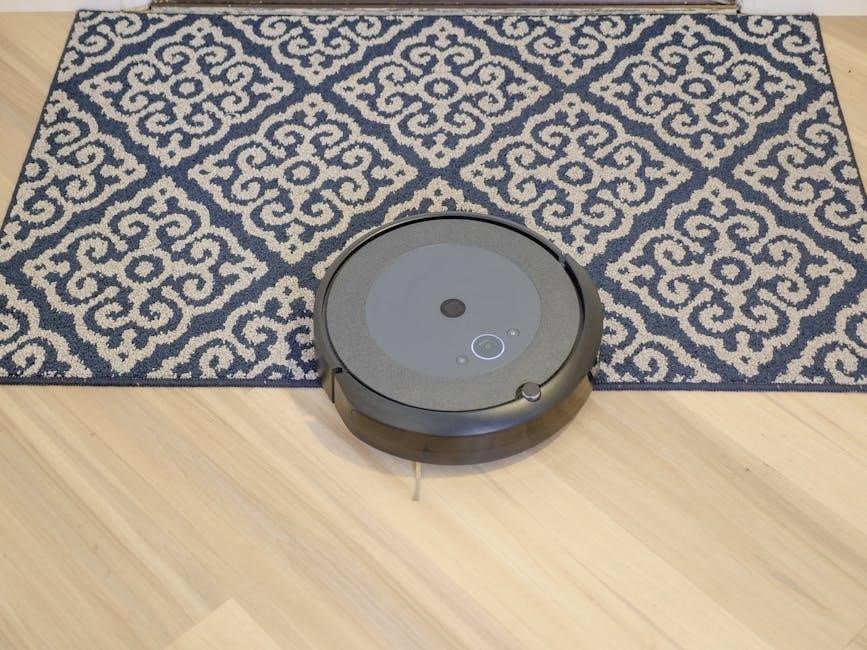
The Roomba i3 features a thoughtfully designed system for efficient cleaning. Key components include the top cover with buttons for basic operation, the bumper which detects obstacles, and side brushes that extend reach along edges; Beneath the robot, you’ll find the multi-surface brushes working in tandem to lift dirt and debris.
The dustbin is easily accessible for emptying, and houses a filter to trap fine particles. The Clean Base™ (if applicable) automatically empties the dustbin. The charging contacts ensure reliable power replenishment. Understanding the location and function of each component is vital for proper maintenance and troubleshooting. Refer to the diagrams within this manual for a visual guide to each part of your Roomba i3.

Getting Started with Your Roomba i3
Prepare for seamless automated cleaning by downloading the iRobot Home App, connecting to Wi-Fi, and initiating your Roomba i3’s first cleaning cycle.
Downloading the iRobot Home App
To unlock the full potential of your Roomba i3, begin by downloading the iRobot Home App. This application, available for both Android and iOS devices, serves as the central hub for controlling and monitoring your robot vacuum.
Simply visit the Google Play Store or the Apple App Store and search for “iRobot Home.” Once located, download and install the app on your smartphone or tablet. The app facilitates Wi-Fi connectivity, allows for customized cleaning schedules, and provides access to advanced features like Keep Out Zones (depending on your model).
Creating an account within the app is a straightforward process, requiring a valid email address and password. Following account creation, the app will guide you through the initial setup process, preparing your Roomba i3 for its first cleaning adventure.
Connecting to Wi-Fi
Establishing a stable Wi-Fi connection is crucial for utilizing the smart features of your Roomba i3. Open the iRobot Home App and navigate to the device settings. Select “Connect to Wi-Fi” and follow the on-screen prompts.
Ensure your smartphone is connected to a 2.4 GHz Wi-Fi network, as the Roomba i3 does not support 5 GHz networks. The app will search for available networks; select yours and enter the correct password. A strong Wi-Fi signal is essential – the manual recommends a minimum distance of 1.2 meters from stairs.
The app will then transmit the Wi-Fi credentials to your Roomba i3. This process may take a few minutes. Once connected, a confirmation message will appear in the app, indicating successful Wi-Fi integration and unlocking remote control capabilities.
First Cleaning Run
Before initiating your Roomba i3’s inaugural cleaning cycle, prepare the area by removing loose cords, small objects, and fragile items. Ensure the charging base is properly positioned against a wall on a level surface with at least 1.2 meters of clear space in front and 0.5 meters on each side.
Within the iRobot Home App, press the “Clean” button to start the automated cleaning process. The Roomba i3 will systematically navigate your floors, utilizing its Dirt Detect™ Technology to focus on areas with concentrated debris.
Allow the robot to complete its cleaning run uninterrupted. Monitor its progress via the app and observe its navigation patterns. After the run, review the cleaning map (if applicable) and address any areas requiring further attention.
Cleaning Performance and Features
The Roomba i3 boasts impressive cleaning capabilities, featuring Dirt Detect™ Technology, Power Boost Cleaning, and potentially Imprint™ Smart Mapping for efficient results.
Dirt Detect™ Technology
Roomba i3’s Dirt Detect™ Technology is a cornerstone of its effective cleaning performance. This innovative system utilizes sensors to identify concentrated areas of dirt and debris on your floors. When detected, the Roomba automatically adjusts its cleaning behavior, focusing extra effort on those specific spots. It doesn’t simply move in straight lines; instead, it employs a more deliberate back-and-forth motion, ensuring thorough removal of stubborn messes like crumbs, dust bunnies, and pet hair.
This targeted cleaning approach maximizes efficiency, saving battery life and cleaning time. Unlike robots that treat all areas equally, the i3 intelligently prioritizes where cleaning is most needed, delivering a noticeably cleaner home with each run. The technology works effectively on both hard floors and carpets, adapting to different surface types for optimal results.
Power Boost Cleaning
The Roomba i3 features Power Boost Cleaning, a function designed to tackle particularly stubborn dirt and debris embedded in carpets and rugs. When the robot detects a carpeted surface, it automatically increases the suction power significantly. This intensified suction lifts dirt, dust, and pet hair more effectively than standard cleaning modes, providing a deeper and more thorough clean.
Power Boost isn’t a constant setting; it’s intelligently activated only when needed. This ensures efficient battery usage while maximizing cleaning performance on carpets. The transition between floor types is seamless and automatic, meaning you don’t need to manually adjust settings. This feature contributes to the i3’s ability to deliver a consistently clean home, even in high-traffic areas or homes with pets.
Imprint™ Smart Mapping (if applicable)
With Imprint™, you can utilize the iRobot Home App to customize cleaning experiences. Define specific rooms for targeted cleaning, or create Keep Out Zones to prevent the Roomba from entering restricted areas. The map also allows for focused cleaning requests, like “Clean under the kitchen table.” Imprint™ enhances the i3’s cleaning efficiency and provides greater control over your robot’s performance, optimizing your cleaning routine.
Maintenance and Troubleshooting
Regular upkeep ensures peak performance. This section details dustbin emptying, brush cleaning, filter replacement, and solutions for common operational issues encountered.
Emptying the Dustbin
Regularly emptying the Roomba i3’s dustbin is crucial for maintaining optimal suction power and cleaning performance. The dustbin capacity is approximately 0.4 liters. iRobot recommends emptying it after each cleaning cycle, or more frequently if you notice reduced suction. To empty, press the dustbin release button located on the robot. Carefully remove the dustbin and open the release latch on the bottom to dispose of the collected debris into a trash receptacle.
Avoid overfilling the dustbin, as this can obstruct airflow and diminish cleaning effectiveness. After emptying, ensure the dustbin is properly reinstalled and securely latched before resuming operation. A full dustbin can also trigger error messages on the iRobot Home App, prompting you to empty it. Consistent dustbin maintenance contributes significantly to the longevity and efficiency of your Roomba i3.
Cleaning the Brushes
Maintaining clean brushes is essential for effective dirt and debris pickup with your Roomba i3. Regularly inspect the brushes for tangled hair, fibers, and other obstructions. To access the brushes, turn the Roomba over. Remove the brush covers and then lift out the brushes themselves. Use the included cleaning tool (or scissors carefully) to cut and remove any wrapped materials from around the brush axles and bristles.
Ensure both the multi-surface rubber brushes and the edge-sweeping brush are free of debris. Reinstall the brushes and covers, ensuring they click securely into place. Dirty or tangled brushes significantly reduce cleaning performance and can strain the robot’s motor. iRobot recommends cleaning the brushes at least once a week, or more often if you have pets or carpets.
Filter Replacement
Regular filter replacement is crucial for maintaining your Roomba i3’s suction power and air quality. The filter traps dust, pollen, and other allergens, preventing them from being recirculated into your home. iRobot recommends replacing the filter every two months, or more frequently if you have pets or allergies.
To replace the filter, locate the dustbin release button and remove the dustbin. Lift out the old filter and insert a new, genuine iRobot filter into the designated compartment. Ensure the filter is properly seated to create a tight seal. A clogged or damaged filter reduces cleaning effectiveness and can potentially damage the robot. Using non-genuine filters may void your warranty and impact performance.
Troubleshooting Common Issues
Encountering issues with your Roomba i3 is common; here’s how to address them. If Roomba stops during cleaning, check for obstructions in the brushes or wheels. Empty the dustbin if it’s full, as this can trigger a sensor error. For Wi-Fi connectivity problems, ensure a strong signal and restart both the robot and your router.
If error messages appear in the iRobot Home App, consult the app’s help section for specific guidance. Regularly check and clean the sensors to maintain optimal navigation. If the robot isn’t charging, verify the charging contacts are clean and properly aligned. Remember to consult the full manual or iRobot support for more complex issues.
Advanced Settings and Customization
Explore personalized cleaning with scheduling options and, if supported, define ‘Keep Out Zones’ for tailored cleaning experiences within the iRobot Home App.
Scheduling Cleaning Cycles
The iRobot Home App allows for effortless scheduling of Roomba i3 cleaning cycles, providing a consistently clean home with minimal effort. Users can set specific days and times for automated cleaning, tailoring the schedule to their lifestyle and preferences. This feature ensures that Roomba cleans when it’s most convenient, even when you’re away.
Within the app, you can create multiple schedules, each with unique settings. For example, you might schedule a light daily cleaning and a more thorough cleaning on weekends. The app’s intuitive interface makes it easy to adjust schedules as needed, offering flexibility and control. Regularly scheduled cleanings help maintain a consistently tidy environment, reducing dust and allergens throughout your home. Remember to check the dustbin frequently, even with scheduled cleaning!
Keep Out Zones (if applicable)
While the Roomba i3 doesn’t natively support advanced “Keep Out Zones” like some higher-end models, strategic use of Virtual Walls™ (sold separately) allows you to define areas the robot should avoid. These physical barriers create an invisible line that Roomba won’t cross, protecting delicate objects, pet bowls, or areas prone to clutter.
Placement is key for effective zone creation. Carefully position Virtual Walls™ to block access to restricted areas, ensuring Roomba focuses its cleaning efforts on accessible spaces. Remember that Virtual Walls™ require batteries and periodic replacement. Consider the layout of your home and identify areas where Roomba’s access needs to be limited for optimal cleaning and to prevent potential issues. This provides a degree of control over the cleaning path.
Cleaning Head Options
The Roomba i3 features a Dual Multi-Surface Rubber Brushes cleaning head, designed to effectively remove debris from both hard floors and carpets without tangling. These brushes work in tandem, loosening and lifting dirt, dust, and pet hair. Unlike models with bristle brushes, the rubber design minimizes hair wrapping, reducing maintenance frequency.
While the i3 doesn’t offer interchangeable cleaning heads like some premium models, the dual rubber brush system is highly versatile. Regularly inspect the brushes for accumulated debris and remove any tangled hair or fibers. Proper brush maintenance ensures optimal cleaning performance and extends the lifespan of the cleaning head components. The design prioritizes ease of use and consistent cleaning across various floor types.
Technical Specifications
The Roomba i3 boasts a 30W power consumption, a 0.4L dustbin capacity, and specific dimensions and weight details outlined in the comprehensive product documentation.
Power Consumption

Understanding the power consumption of your Roomba i3 is crucial for efficient operation and energy management within your home. The Roomba i3 is designed to deliver powerful cleaning performance while remaining relatively energy efficient. According to the technical specifications, the typical power consumption during a cleaning cycle is approximately 30 Watts.
However, this value can fluctuate based on several factors, including the selected cleaning mode (e.g., standard cleaning versus Power Boost), the floor type being cleaned (carpet versus hard floors), and the overall duration of the cleaning session. When docked and charging, the power consumption will naturally be higher as the battery replenishes its charge.
iRobot has engineered the i3 to optimize energy usage, ensuring a balance between cleaning effectiveness and responsible power consumption, contributing to a lower environmental impact and reduced energy bills for the user.
Dustbin Capacity
The Roomba i3 features a conveniently sized dustbin designed to effectively collect dirt, dust, and debris during cleaning cycles. Understanding its capacity is key to maintaining optimal cleaning performance and avoiding interruptions. The dustbin on the Roomba i3 has a capacity of 0.4 liters (or approximately 13.5 cubic inches).
This capacity is generally sufficient for cleaning a moderate-sized area before requiring emptying. However, the frequency of emptying will depend on factors such as the level of dirt and debris in your home, the type of flooring, and the selected cleaning mode. Regularly emptying the dustbin is crucial; a full bin reduces suction power and cleaning efficiency.
iRobot recommends emptying the dustbin after each cleaning cycle, or more frequently if the Roomba encounters particularly dusty or debris-filled areas, ensuring consistently powerful cleaning.
Dimensions and Weight
Understanding the physical specifications of your Roomba i3 is important for navigating its operation within your home environment. The Roomba i3 boasts a compact design, allowing it to maneuver under furniture and into tight spaces for thorough cleaning. Its diameter measures approximately 34.5 centimeters (13.6 inches), and its height is around 9.25 centimeters (3.64 inches).
These dimensions enable it to fit under most standard furniture, maximizing its cleaning reach. Regarding weight, the Roomba i3 weighs approximately 3.17 kilograms (7 pounds). This weight provides stability during operation while remaining light enough for easy carrying and maintenance.
These specifications contribute to the Roomba i3’s overall usability and effectiveness as a robotic cleaning solution, ensuring it can seamlessly integrate into your cleaning routine.
Safety Information and Warnings
Important Safety Instructions: To ensure safe and effective operation of your Roomba i3, please read and understand the following warnings. Always supervise children and pets during operation. Do not operate the Roomba in wet areas or expose it to liquids. Keep the charging station away from water sources and flammable materials.
Avoid using the Roomba to clean up hazardous materials or sharp objects. Regularly inspect the brushes and cleaning head for damage. Do not attempt to disassemble or repair the Roomba yourself; contact iRobot customer support for assistance. Ensure a clear path for the Roomba, removing small objects and cords that could pose a tripping hazard.
Use only the provided power adapter and charging station. Disconnect the Roomba from power before cleaning or performing maintenance. Failure to follow these safety guidelines could result in injury or damage to the device.